Showing posts with label 19th Century History. Show all posts

Thursday, June 10, 2021

2021 Reading, How Baseball Happened: Outrageous Lies Exposed! The True Story Revealed


This is a serious work of history, well researched and written by Thomas W. Gilbert, a Brooklyn-based baseball author. Not only does he blow much of the mythology surrounding baseball's origins out of the water, he also tells a lot about the history of New York City and the manner in which the United States developed socially and economically in the nineteenth century. I already knew that General Abner Doubleday did not invent the game. But I had believed that Englishman Alexander Cartwright (one of many bogus "fathers of baseball") had played a key role in baseball's development, which is not true. Nor is it true that baseball descended from the British games of cricket and rounders. While it has been a nice thing for Cooperstown, New York to host the National Baseball Hall of Fame, the true birthplace of baseball is New York City, with a major assist from Brooklyn. Hoboken, New Jersey, gets in on the action, due to it having contained the Elysian Fields, a popular resort area for mid-19th century New Yorkers where New York-based baseball clubs went to play. 

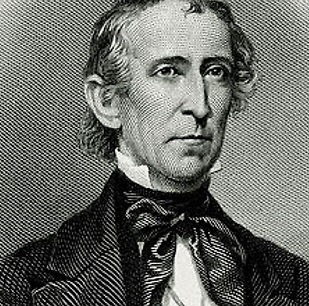
The man pictured above is Henry Chadwick, a transplanted Englishman who wrote about baseball, although he preferred cricket, and was a pioneering baseball statistician. He is among those who have been called "the father of baseball", although he certainly didn't invent the game by any stretch of the imagination. He was quick to question the Doubleday founding myth, although he mistakenly considered baseball to be descended from rounders. 

There are many other popularly believed myths about baseball's founding and early years that are shattered in this book. The Knickerbockers of New York were not the first organized club, and the 1869 Cincinnati Red Stockings were not the first to use paid players. Other than the variation on the name, the modern Reds are in no way related to the 1869 team. 

Charging admission to baseball games came about as a result of the early contests between clubs from Brooklyn and New York, which created fan interest. James Creighton, a Brooklyn pitcher, became baseball's first major star during the amateur era.


Utilizing a unique delivery, in keeping with the rules at the time, Creighton was highly successful until his untimely death at age 21. Like many of the baseball players of the mid-nineteenth century, he also played cricket. 

The so-called "New York game" followed the railroads and mercantile routes to become America's national game, pushing aside cricket and local bat-and-ball variations like "town ball". Philadelphia and Washington were fairly quick to adopt baseball, but Boston and eastern Massachusetts stuck with their local game for several more years. 


Where did the Doubleday myth come from, you might ask? It was a product of the Mills Commission that was created by baseball pioneer and sporting goods manufacturer Albert Spalding (pictured above) in 1905 with the goal of determining baseball's origins and proving that it was not derived from rounders, as Henry Chadwick had written in an article. The commission concluded that Doubleday invented the game in Cooperstown, New York in 1839. The commission-ratified myth became the officially-sanctioned story (taking on the mantle of holy writ, which is often similarly nonsensical, and like this myth, is no longer believed by knowledgeable people today). But the important thing is that the myth is a myth, or as author Gilbert terms it, bullshit. 

This book exposes lots of myths and bullshit. It is also an excellent read and very informative about baseball and America during the sport's early years.  


Saturday, January 30, 2021

My Presidential Biographies, Part 2: Lincoln to McKinley

 It's on to Part 2 of my list of presidential biographies, taking us through the period from the Civil War to the end of the nineteenth century. Moving right along:


ABRAHAM LINCOLN


Lincoln remains a political figure that I deeply admire, despite his flaws. The first president who I might label a liberal pragmatist, he brought a formidable legal mind and political skill to the office at a crucial juncture in American history. Having read a lot about the Civil War era (which might be the subject of a future post), the 16th President fills a fair amount of shelf space in my library.

Honor's Voice: The Transformation of Abraham Lincoln by Douglas L. Wilson

Fascinating book that focuses on his personal development prior to reaching the White House. I found out that friends thought that his religious skepticism might deter his achieving high office among other things. A very worthwhile read if you want to gain insight into President Lincoln.

Abraham Lincoln: The Prairie Years and the War Years by Carl Sandburg

A single-volume edition of what had been a two-volume work. Sandburg's bio was very popular at one time (and in my household growing up), and it is also very dated in some of its perspectives and contains many factual errors. Unreliable as a work of history, it is a fine literary work.

Abraham Lincoln by D.W. Brogan

This book was a gift to me many years ago from someone who wondered if I would be put off by it. I wasn't. The author is kinder to Lincoln's antagonists Stephen A. Douglas and General George McClellan than I would be, but he assesses Lincoln to have been a great man. No challenge to the consensus there.

Abraham Lincoln: A Biography by Benjamin P. Thomas

A Modern Library reprint of a book originally published in 1952, it covers plenty of familiar ground very nicely. I recall that his commentary on the 1860 Republican Convention is especially well done.

With Malice Toward None: The Life of Abraham Lincoln by Stephen B. Oates

A more modern biography by an author who also wrote a fine bio about Martin Luther King (a subject for a future post). He covers familiar ground, of course (and was accused of plagiarism as a result), but I felt that he covered that familiar ground adroitly. From the difficulties, and many defeats, along the road to political success to growing into the role of wartime leader, trying to balance his sincere opposition to slavery with preservation of the nation, Oates provides a fine portrait of a complex and driven individual.

Abraham Lincoln: The Man Behind the Myths by Stephen B. Oates

Oates comes back for more with Lincoln. He points out that the mythmaking regarding Lincoln began almost immediately following his assassination in 1865. Martyrdom will do that for one's reputation. Oates points out the inaccuracies and presents a very human portrait of the 16th President, filled with flaws as well as impressive virtues. Very worthwhile for those wishing to take a nuanced view of this extraordinary President.  

Lincoln at Gettysburg: The Words That Remade America by Garry Wills

Wills places the Gettysburg Address in historical and intellectual context. Very well done, and similar to Oates, he blasts away at some popular myths regarding the speech and its development. 

Abraham Lincoln and the Second American Revolution by James M. McPherson

A leading Civil War historian offers his perspective on Lincoln in seven engrossing essays. Very interesting and persuasive.

Reelecting Lincoln: The Battle for the 1864 Presidency by John C. Waugh

Lest we forget, President Lincoln was an astute and capable politician. This book delves into the politics of a presidential election during a time of civil war. Well written and filled with drama, the leading political figures of the time, including the President himself, are well portrayed. Lincoln's re-election was not a foregone conclusion and the military situation was the key to determining the outcome. Successfully re-nominated, the Democrats offered up General George McClellan as their nominee. A popular, if inept, past commander of the Union army, it was anticipated that he would carry the soldier vote. He did not, and Lincoln won a second term, that he would not live to finish out.

The Lincoln Murder Conspiracies by William Hanchett

The assassination of President Lincoln was the result of the only proven presidential assassination conspiracy in US history. Belief that the conspiracy ran far deeper was widespread at the time and beyond and fueled conspiracy theories long after the event. Hanchett explains what actually happened, what John Wilkes Booth had originally planned, which was to be a kidnapping, and how it ended up as an assassination (the only one of several planned for that night that came to fruition, although Secretary of State Seward survived a brutal attack). The author adroitly explores the conspiracy theories, debunking each in turn. Very readable and interesting.

Pending: Lincoln by David Herbert Donald


ANDREW JOHNSON


A pro-Union Tennesseean who was a Democrat, Johnson found himself as Lincoln's running mate in 1864 on a union ticket. Thrust into the White House upon Lincoln's death, Johnson proved that he was sympathetic to his fellow southerners when it came to Reconstruction, which put him at odds with the Republican Congress and led to his being the first president to be impeached (avoiding conviction by a single vote). Not a sympathetic character by any means.

Andrew Johnson: A Biography by Hans L. Trefousse

A thorough bio that follows the track from his early life to a failed presidency.

The Impeachment and Trial of Andrew Johnson by Michael Les Benedict

A thorough study of the political situation that led to Johnson's impeachment. There were complexities that went beyond Reconstruction and President Johnson's handling of his office which factor into why he avoided conviction. 


ULYSSES S. GRANT


I long bought into the prevailing opinion that Grant was an overrated general and terrible president. My attitude began to change after I had read deeply about the Civil War. I came to appreciate his performance as a down-to-earth military commander. Would that he had left it at that. Allowing himself to be propelled into the White House put him into an office for which he was less well suited. He deserves credit for supporting his party's Reconstruction policy and trying to protect the civil rights of the freed slaves. His administration was badly stained by corruption (although not by him personally). Rumors of heavy drinking dogged him from the time of his service following the Mexican-American War, apparently exaggerated by his enemies.

Personal Memoirs of U.S. Grant

Written while he was nearly broke and dying of cancer, Grant's memoirs are quite readable and revealing. 

Grant: A Biography by William S. McFeely

Very thorough bio of the eighteenth President and well worthwhile.

U.S. Grant: American Hero, American Myth by Joan Waugh

An excellent study of Grant's life, death, memorialization, and the development of his reputation and popular perception over the years.

Pending: Grant Takes Command by Bruce Catton & Ulysses S. Grant: Triumph Over Adversity, 1822-1865


RUTHERFORD B. HAYES


Elected in 1876 in a genuinely disputed election that had to be decided by an Electoral Commission, President Hayes endured a difficult term in office. Other than that, he is perhaps best remembered for his wife, dubbed "Lemonade Lucy", who forbade the serving of alcohol in the White House. She was also the first First Lady to have a college degree and was an advocate for African-Americans who invited the first African-American musician to the White House. Maybe someone should write a biography about her. I have yet to obtain a biography of President Hayes.

Pending: Fraud of the Century: Rutherford B. Hayes, Samuel Tilden, and the Stolen Election of 1876 by Roy Morris, Jr.


JAMES GARFIELD


The second president to be assassinated was a surprise nominee at the 1880 Republican Convention.

Dark Horse: The Surprise Election and Political Murder of President James A. Garfield by Kenneth D. Ackerman

Excellent account of the political situation in 1880 that led to Garfield's nomination and election. The factionalized Republican Party had stymied President Hayes and led to the nomination of the "dark horse" Garfield who won a stunningly close general election. The story is filled with drama and intrigue and contains an excellent account of the assassination itself that led to the twentieth President's death two months later. 


CHESTER A. ARTHUR


The urbane and amiable 21st President, known as "Chet" to his friends in New York society, was added to the 1880 Republican ticket as a sop to the Stalwart faction of the Republican Party and its leader, New York Senator Roscoe Conkling. With expectations low upon his accession to the presidency upon Garfield's death, President Arthur made an effort to prove that he could rise above faction and party and made a generally good impression. The Civil Service Commission was an enduring part of his legacy.

Gentleman Boss: The Life of Chester Alan Arthur by Thomas C. Reeves

Excellent biography of the 21st President.

Pending: Chester Alan Arthur by Zachary Karabell from the American Presidents series.


GROVER CLEVELAND


The 22nd and 24th President, due to his serving non-consecutive terms (I will list him just one time here), Cleveland was elected the first time, in 1884, in an extremely dirty campaign in which the then-bachelor admitted to having fathered a child out of wedlock, which enhanced his reputation for honesty. A conservative Democrat, he proved to be an able and hard-working administrator. His return to the White House in 1893 was marred by a severe economic depression. President Cleveland did marry during his first term, and Frances Cleveland, the youngest First Lady at 21 (he was 49), was popular with the public and a counter-balance to the President's dour personality.

An Honest President: The Life and Presidencies of Grover Cleveland by H. Paul Jeffers

An okay bio that doesn't delve too deeply.


BENJAMIN HARRISON 


The grandson of the ninth President, William Henry Harrison, the 23rd President was aloof although intelligent and diligent. He lost the popular vote to President Cleveland in 1888, but carried the electoral vote to gain the White House. Cleveland won the rematch four years later.

I have not read a full biography of President Harrison, but there is one available through the American President series. So, it may yet happen.


WILLIAM McKINLEY


The last Civil War veteran to reach the White House, McKinley was long dismissed as an unwitting tool of his campaign manager and financier Mark Hanna. Biographers have concluded otherwise, as you will see. He twice defeated Democrat William Jennings Bryan, who ran a strong liberal populist campaign against McKinley in 1896 and emphasized imperialism in the 1900 rematch, as a result of the Spanish-American War acquisitions, most notably the Philippines. In 1901 the 25th President was assassinated by an anarchist (the terrorist threat du jour) just a few months into his second term.

In the Days of McKinley by Margaret Leech

A solid full biography of President McKinley that was published in 1959 and promotes the view that he was no one's tool and a very capable politician.

William McKinley by Kevin Phillips from the American Presidents series.

Written from a conservative viewpoint, McKinley is presented as an outstanding and transformative leader.

Murdering McKinley: The Making of Theodore Roosevelt's America by Eric Rauchway

An excellent short study (213 pages) of the McKinley assassination and a little beyond (as the title hints).

Pending: President McKinley: Architect of the American Century by Robert W. Merry

Thus concludes Part 2. Part 3, leading off with one Roosevelt and ending with another, will follow shortly.


Saturday, January 23, 2021

My Presidential Biographies, Part 1: Washington to Buchanan

We had a presidential inauguration this week and that had me thinking about the Presidents of the United States and the role they played in igniting my life-long love affair with history. It began with the Presidents back many years ago when I was in Kindergarten (yes, there is a story, but I will not relate it here). My nerd credentials were established early on. Since that time I have read many books dealing with individual presidents, presidential campaigns, and the like. Perusing my bookshelves, I see quite a few presidential titles. If you have read this far and feel at all curious as to what I have read (and might be looking for some recommendations), I can provide a list, along with some commentary. Changes in my political perspective have caused me to re-evaluate a number of the presidents. Some of the books I found to be more inciteful than others. I am splitting up the list into multiple posts in order to not make things interminable for my readers. Books pertaining to specific elections get included where appropriate. And, having several books with short biographies of the Presidents, I do have other biographical sources to draw on, which, in some instances, are the only ones that I have. So, here goes:


GEORGE WASHINGTON


Yes, he was a slave-owning member of the Virginia aristocracy. But, in terms of his approach to political leadership, he was sort of the anti-Trump. 

George Washington: Soldier and Man by North Callahan

Mom got me this one for Christmas one year when I was in high school. It was appropriate for me at the time. Nothing challenging.

Washington: The Indespensable Man by James Thomas Flexner

A popular biography. Interesting and it humanizes the icon a bit.

General Washington's Christmas Farewell: A Mount Vernon Homecoming, 1783 by Stanley Weintraub

A big part of what made Washington a celebrated figure in his time was his willingness to step away from power following the success of the American Revolution. The story of his turning in his commission to Congress and returning to his home is at the center of this very readable and interesting account.

Cincinnatus: George Washington & the Enlightenment by Garry Wills

I like Wills' writing a great deal. Very enlightening with regard to Enlightenment perspectives on power and charismatic leadership in a republic. Even the artwork pertaining to Washington at the time provides insight. 

His Excellency George Washington by Joseph J. Ellis

Easy to read, by a solid biographer. No surprises.

Patriarch: George Washington and the New American Nation by Richard Norton Smith

A biography by a writer who typically took on twentieth century figures. He covers Washington's presidency and brief retirement very thoroughly.

Pending: George Washington by James MacGregor Burns and Susan Dunn from the The American Presidents series.


JOHN ADAMS


Our second President has become far more popular in recent times than he was in his own time. Definitely an interesting character - a classical conservative who found himself supporting a revolutionary cause. And he became the first President to seek and be defeated for re-election. 

John Adams: A Life by John Sterling

A good full-length biography. It set a standard for the popular McCullough biography to live up to, which you will see is pending.

Passionate Sage: The Character and Legacy of John Adams by Joseph J. Ellis

Yes, Ellis covered Adams as well as Washington. This book focuses on his long retirement after he was turned out of the presidency in the 1800 election.

Pending: John Adams by David McCullough


THOMAS JEFFERSON


In contrast to his political rival John Adams, who has gained in popularity in modern times, from my perspective no Founding Father has dropped more precipitously in popular esteem during my lifetime than Jefferson. The behaviors that fueled attacks from the Federalist press during his pursuit of the presidency and administration have come back to haunt him big time in 21st century America. His writings about all men being created equal don't fit with his slave owning and sexual exploitation of said slaves. Still an interesting and significant biographical subject. 

Adams vs. Jefferson: The Tumultuous Election of 1800 by John Ferling

A very readable account of the 1800 election which ultimately had to be settled in the House of Representatives due to an electoral tie between Jefferson and his running mate Aaron Burr.

Empire of Liberty: The Statecraft of Thomas Jefferson by Robert W. Tucker & David C. Hendrickson

A good and readable study dealing with the issues between Federalists and Democratic-Republicans during the 1790s, leading up to Jefferson's election. The successes and failures of the Jefferson Administration are discussed in depth. 

Pending: Thomas Jefferson by Joyce Appleby from the American Presidents series, Thomas Jefferson: A Life by Willard Sterne Randall


JAMES MADISON


Our most diminutive president in stature at 5'4", Madison shares most of the same negatives as Washington and Jefferson. The so-called "Father of the Constitution" since he kept the best notes at the Constitutional Convention, he went on to guide the Bill of Rights to Congressional approval. Jefferson's key ally, who served as his Secretary of State, he managed to be a wartime Commander in Chief at the time of the War of 1812 (aka Mr. Madison's War). 

James Madison: The Founding Father by Robert A. Rutland

A solid full biography of the fourth President.


JAMES MONROE


Not much to say about the fifth President, who finished off the Virginia Dynasty and benefited from the lack of a credible opposition party with the disintegration of the Federalists as a national force. Books about Monroe:

James Monroe: The Quest for National Identity by Harry Ammon

Another solid presidential biography.

Pending: The Presidency of James Monroe by Noble E. Cunningham, Jr.


JOHN QUINCY ADAMS


The first son of a President to achieve the office, Adams was an impressive intellectual who was an accomplished diplomat prior to reaching the White House and concluded his life of service to the nation as a member of the House of Representatives following his presidency.

John Quincy Adams: A Public Life, A Private Life by Paul C. Nagel.

A very fine full biography of the sixth President.

I should add that both John and John Quincy are covered in Descent From Glory: Four Generations of the John Adams Family by Paul C. Nagel


ANDREW JACKSON


In many ways, the 19th century prototype for Donald Trump, Jackson has also fallen far out of favor in recent times. 

Andrew Jackson and the Course of American Empire 1767-1821, Andrew Jackson and the Course of American Freedom 1822-1832, Andrew Jackson and the Course of American Democracy 1833-1845 by Robert Remini

A very comprehensive three-volume biography of the seventh President. 

Andrew Jackson by Sean Wilentz from the American Presidents series

Wilentz provides a nuanced portrait of Jackson. 

Pending: American Lion: Andrew Jackson in the White House by Jon Meacham


MARTIN VAN BUREN


A clever and astute politician, he teamed with Andrew Jackson to create a formidable electoral coalition.

Martin Van Buren: The Romantic Age of American Politics by John Niven

A good, if sloppily edited, biography.


WILLIAM HENRY HARRISON


Son of a signer of the Declaration of Independence, Harrison rode a "log cabin and hard cider" campaign to out-populist the Democrats and deny Van Buren a second term. He is best known today for catching a cold at his inauguration, where he delivered the longest inaugural address (even after Daniel Webster edited it), that turned into pneumonia and led to his death after only a month in office.

I have only recently obtained a biography of the ninth President.

Pending: William Henry Harrison by Gail Collins from the American Presidents series.


JOHN TYLER 


The first vice-president to take over for a deceased president, Tyler set a lasting precedent (since codified in the 25th Amendment) by insisting that he was not an Acting President but had the full authority of the office (also insisting on taking the presidential oath). These were controversial actions at the time but set a lasting standard. Thus concludes my positive comments regarding President Tyler. He is also one of my least favorite presidents who strong-armed the annexation of Texas (resisted by anti-slavery Whigs), was cast out of the party for failing to support the Whig program, and he ended his life as a member of the Confederate Congress.

John Tyler: The Accidental President by Edward P. Crapol

A sympathetic biography of the tenth President. Very readable and persuasive if you agree with the author's pro-Tyler perspective.


JAMES POLK


When I was much younger I had a high opinion of the eleventh President, before I came to fully realize that this Jackson protege was a rampant expansionist who goaded the Mexicans into a wholly illegitimate war. He remains the only Speaker of the House to become president. 

James K. Polk by John Seigenthaler from the American Presidents series. 

A good short sketch of President Polk.

Pending: Polk: The Man Who Transformed the Presidency and America by Walter R. Borneman


ZACHARY TAYLOR


A career soldier who was vaulted into prominence by the Mexican-American War, President Taylor was summed up by his biographer as "a man of limited emotional and intellectual capacity" who "was and remains an enigma". He also died in office in 1850, spurring a conspiracy theory as to his having been poisoned that led to his body being exhumed in 1991 and checked for evidence of arsenic poisoning. The answer came back that he had clearly not been poisoned but was more likely a victim of the poor sanitation and medical practices of the time in dealing with an attack of "acute gastroenteritis" after overindulging on raw cherries and iced milk on an extremely hot and humid July 4 in Washington (he died on July 9).

Zachary Taylor: Soldier, Planter, Statesman of the Old Southwest by K. Jack Bauer

A good, readable, and thorough bio of the twelfth President, containing the summation quoted above.


MILLARD FILLMORE


The 13th President long ago became a symbol of presidential mediocrity and is reviled now as having been the presidential nominee of the nativist American (aka Know Nothing) Party in 1856. Supported by conservative members of the defunct Whig Party at the time, he had little, if anything, to say about immigration, but was more interested in preservation of the union.

Pending: Millard Fillmore by Paul Finkelman from the American Presidents series.


FRANKLIN PIERCE


A northerner from New Hampshire who was sympathetic to the southern viewpoint on the national issues of the day (primarily slavery and states' rights), Pierce handled the crisis in Kansas especially poorly and was unable to gain re-nomination in 1856. The first book that I will list under his successor, Buchanan, details the extent of his administration's failure with regard to "Bleeding Kansas".

Pending: Franklin Pierce by Michael F. Holt from the American Presidents series.


JAMES BUCHANAN


Was the bachelor James Buchanan our first gay president? Maybe, but his biographer Jean H. Baker thinks that he was likely more asexual than homosexual. Hard to say without use of a time machine. His relationship with Senator William King raised eyebrows at the time. Another southern-sympathizing northerner, his presidency helped pave the way for secession and disunion, aided and abetted by southerners in his cabinet.

America in 1857: A Nation on the Brink by Kenneth M. Stampp

A very interesting book that details President Pierce's political failings (as I alluded to above) and Buchanan's inadequate response. I recommend it to anyone interested in that time period.

James Buchanan by Jean H. Baker from the American Presidents series.

Very interesting and makes clear the failings of his presidency, if not clarifying his sexual orientation.


Thus concludes Part 1. Part 2, leading off with Lincoln, will follow in due course.